Start With Why
Once upon a time, cybersecurity focused entirely on building taller walls. The goal was to keep the bad guys out. But every day, attackers breached those walls. Once inside, they could roam the network silently, stealing data while security teams chased thousands of false alarms generated by noisy perimeter monitoring systems.
If you are a normal person walking down the street, this sounds absurd. If someone breaks into your house, you want the alarm to go off while they are inside, not just when they touch the front door lock. In the digital world, this is where the Canary Token changes everything.
The Inventors: Thinkst Applied Research
One day, Haroon Meer and the team at Thinkst Applied Research asked a brilliant question: "What if we stop trying to keep attackers out, and instead leave fake, traceable data lying around inside?"
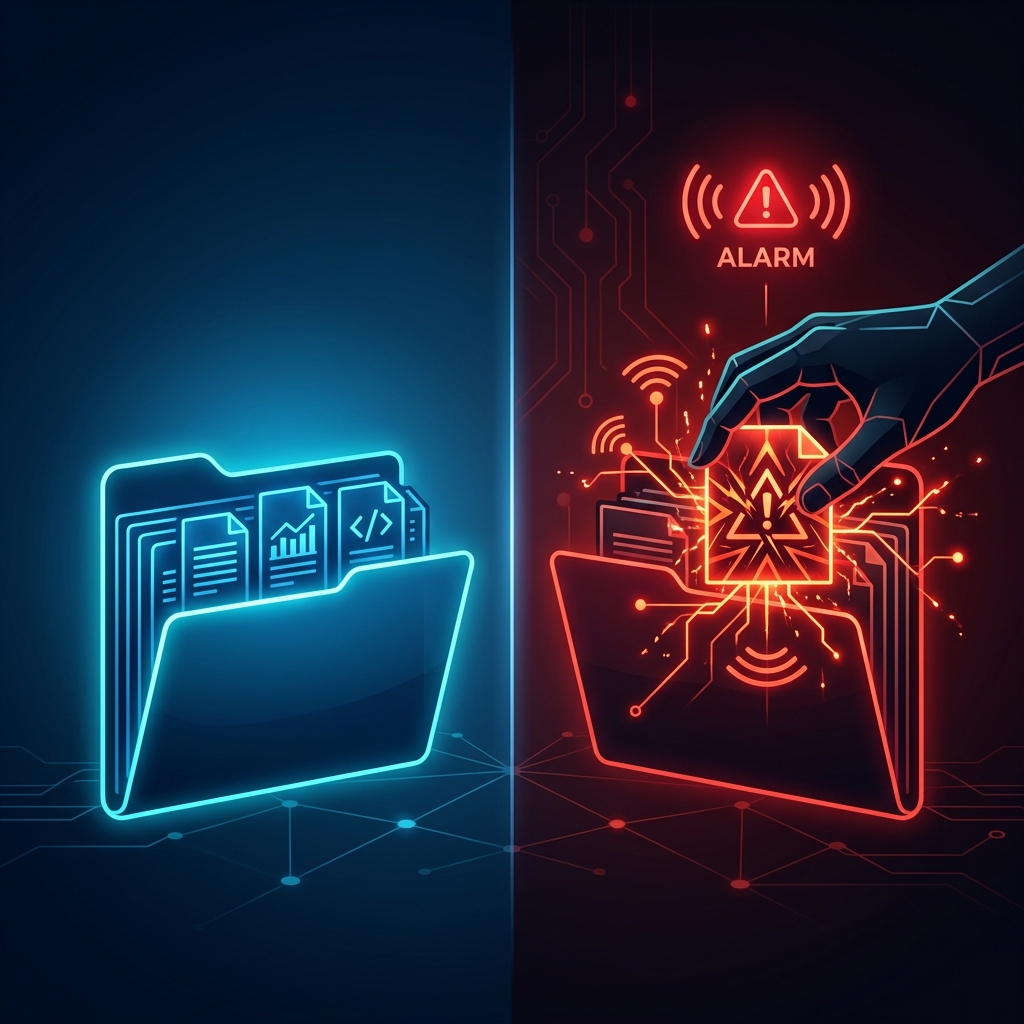
The concept drew inspiration from coal miners taking a literal canary into the mines. If the canary died, it was an immediate, indisputable signal of invisible danger. Thinkst digitized this. They created fake AWS keys, dummy Word documents, and decoy API credentials. These are entirely useless for accessing real data, but the moment they are opened, queried, or executed, they instantly send a silent ping back to the defender.
SOC teams are drowning in false alerts from traditional EDR systems. Finding a real threat is like finding a needle in a haystack of normal traffic.
A zero-noise alert. If a fake Excel file named "Q3_Payroll_Passwords.xlsx" in a hidden directory is opened, there is zero ambiguity. A breach has occurred.
Traditional threat hunting relies on analyzing massive logs and predicting attacker behavior—an inherently reactive and noisy process.
Enterprise CISOs, cloud architects, and data sovereignty engineers who demand 100% true-positive breach detection without adding CPU overhead.
How Canary Tokens Actually Work
Because of Haroon Meer's thesis, security teams started placing these traps inside their infrastructure. Here is a practical example:
- The Setup: You generate a Canary Token disguised as an AWS API key and leave it in a developer's
.bash_historyfile. - The Breach: A hacker breaches the developer's laptop, scrapes the environment, and steals the key. They attempt to authenticate against AWS using it.
- The Trap: AWS rejects the dummy key, but the Canary Token infrastructure logs the attacker's IP address, user-agent, and exact time of access, instantly pushing an alert to your Slack channel.
Until finally, defenders didn't need to manually hunt for breaches anymore. The data itself signaled exactly when and where an attack occurred. And ever since that day, Canary Tokens became the highest-fidelity defense mechanism in modern incident response.
The Vulnerability Point
We believe in radical honesty as Trust Architects. Canary tokens are incredible, but they have a limitation: they only work if the attacker touches them. If an adversary knows exactly what they are looking for and perfectly bypasses your honeypots, the canary stays completely silent. It is a strictly post-breach detector, not a pre-breach shield. It guarantees you know they are inside, but it cannot prevent them from entering.
Tactical Wedge: Protect What Matters
Stop trying to monitor every packet on your network. Instead, place a Canary Token inside your most sensitive IP folders. If an alarm fires, you do not need an analyst to interpret it—you pull the plug immediately.