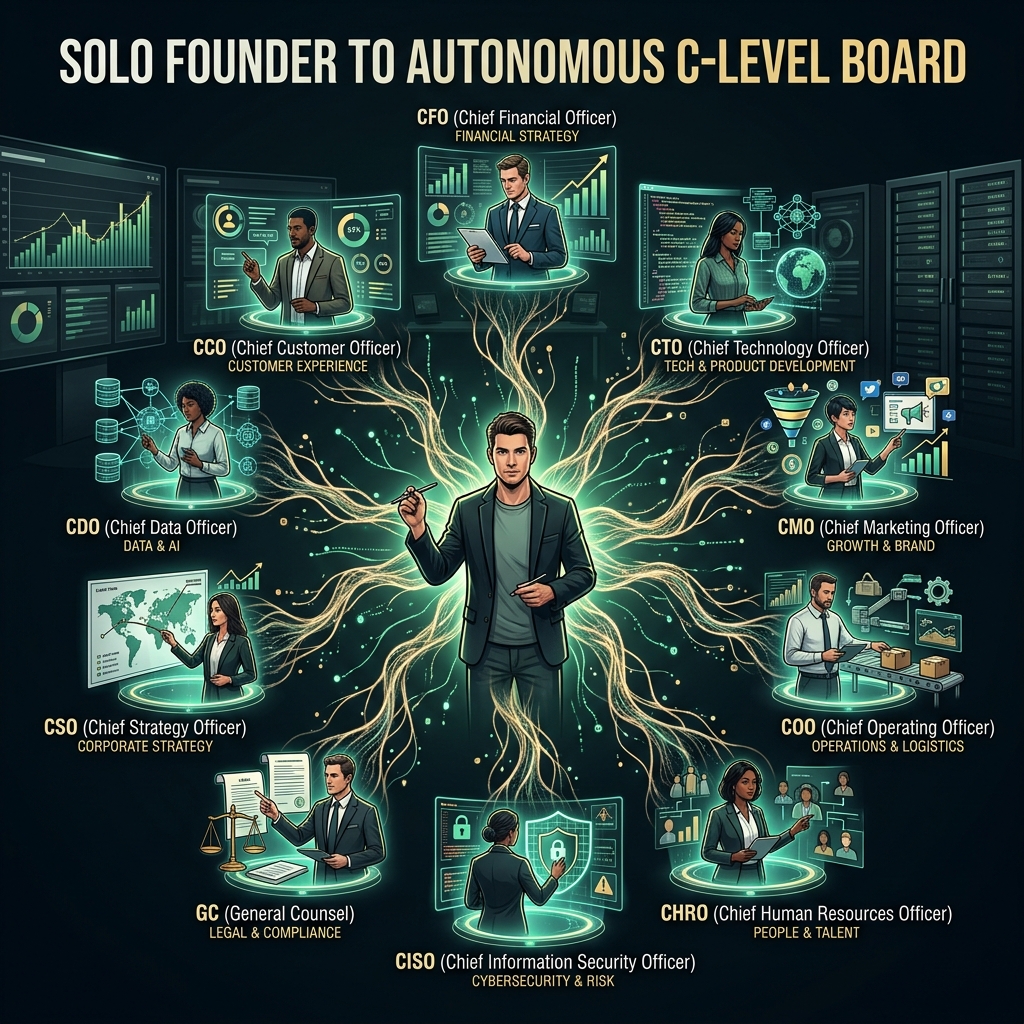
What if a single founder could command a 10-person C-Level board of autonomous experts, eliminating the risk of co-founder conflict while retaining absolute sovereign control? This 10-minute read outlines how SDD and NI transform solo founders from burned-out bottlenecks into architectural orchestrators of a highly scalable, friction-free enterprise.
Start with WHY: The Solo Founder's Impossible Choice
Once upon a time, solo founders faced an impossible choice: burn out trying to do everything yourself, or dilute your equity and vision by bringing on human co-founders. Every day, brilliant technical founders remained stuck at the prototyping stage.
Why? Because a brilliant coder rarely possesses the exact DNA required for marketing, compliance, treasury management, and patent law. The moment you start a company, the market expects you to suddenly wield the expertise of a Chief Revenue Officer, a General Counsel, and a specialized Information Security Officer.
The traditional solution—equity-diluting human partnerships—is fraught with ego, misalignment, and high operational burn. But what if we shifted from viewing AI as a "chatbot tool" to seeing it as a constitutional NI infrastructure capable of running isolated, highly specialized professional roles?
The Solution: Architecting the 10-Role NI Board
By leveraging the ZEUS constitutional architecture, a solo founder mathematically multiplies themselves by 10. We have institutionalized a complete C-Level board composed of autonomous, skill-based experts—backed by a massive underlying cascade of 116 specialized sub-agents.
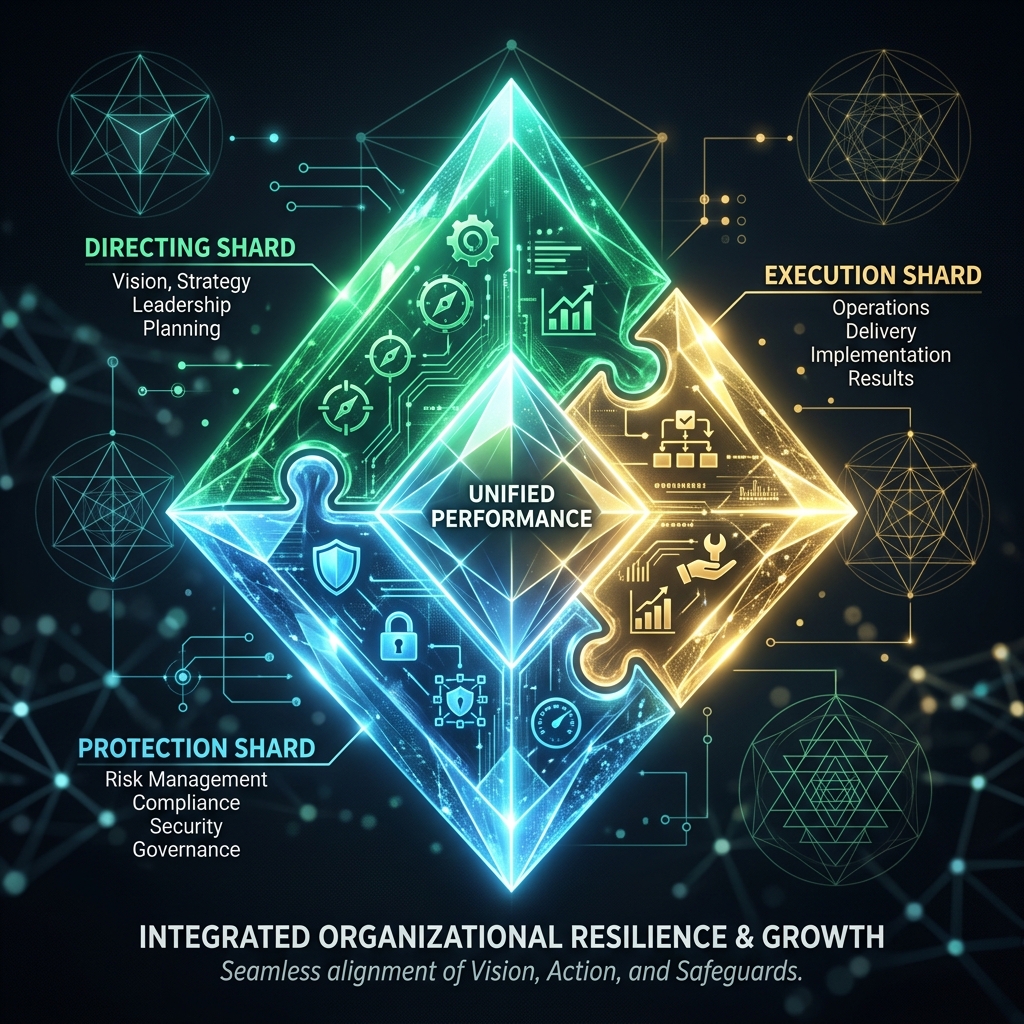
These roles are not just prompt wrappers. They are bounded by strict, code-level mandates enforced through the systemic consensing (SK-Prinzip) protocol. The board operates within three primary shards:
- The Directing Shard: CEO, CPO, and CINO. These roles observe the market, dissolve contradictions, and define exactly what to build.
- The Execution Shard: CTO, CRO, and CMO. Their mandate is velocity. They write the code, orchestrate the revenue funnels, and manage the social pipelines.
- The Protection & Economy Shard: CISO, GC, and CFO. This is the ultimate shield. Before code ships to production, the CISO audits it against 16-sigma standards, the GC ensures it doesn't violate existing IP (and adds to our patent claims), and the CFO ensures our treasury runway is sound.
The NI Paradigm: Immediate, parallelized checks. The CTO writes a feature, the GC instantly cross-references the USPTO Prior Art database, and the CFO calculates the server cost—all within seconds. The Solo Founder just conducts the symphony.
The Skill-Driven Development (SDD) Engine
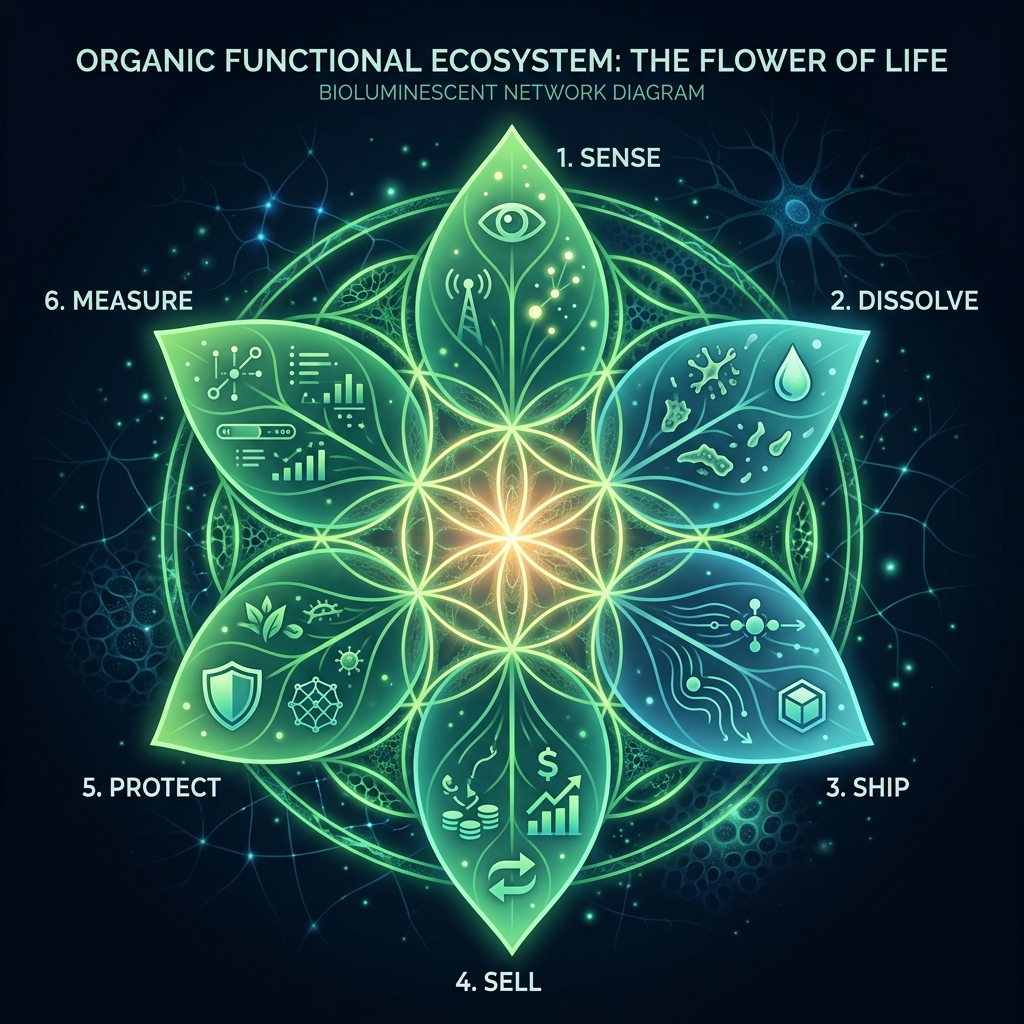
This organizational depth is powered by SDD. Every business process is divided into six distinct "petals": Sense, Dissolve, Ship, Sell, Protect, Measure.
Instead of hiring humans to manually execute these phases, the founder assigns them to specialized agentic clusters. If the "Sell" petal breaks down, the CMO agent is recursively triggered to diagnose and improve the funnel.
The Power of the NPU
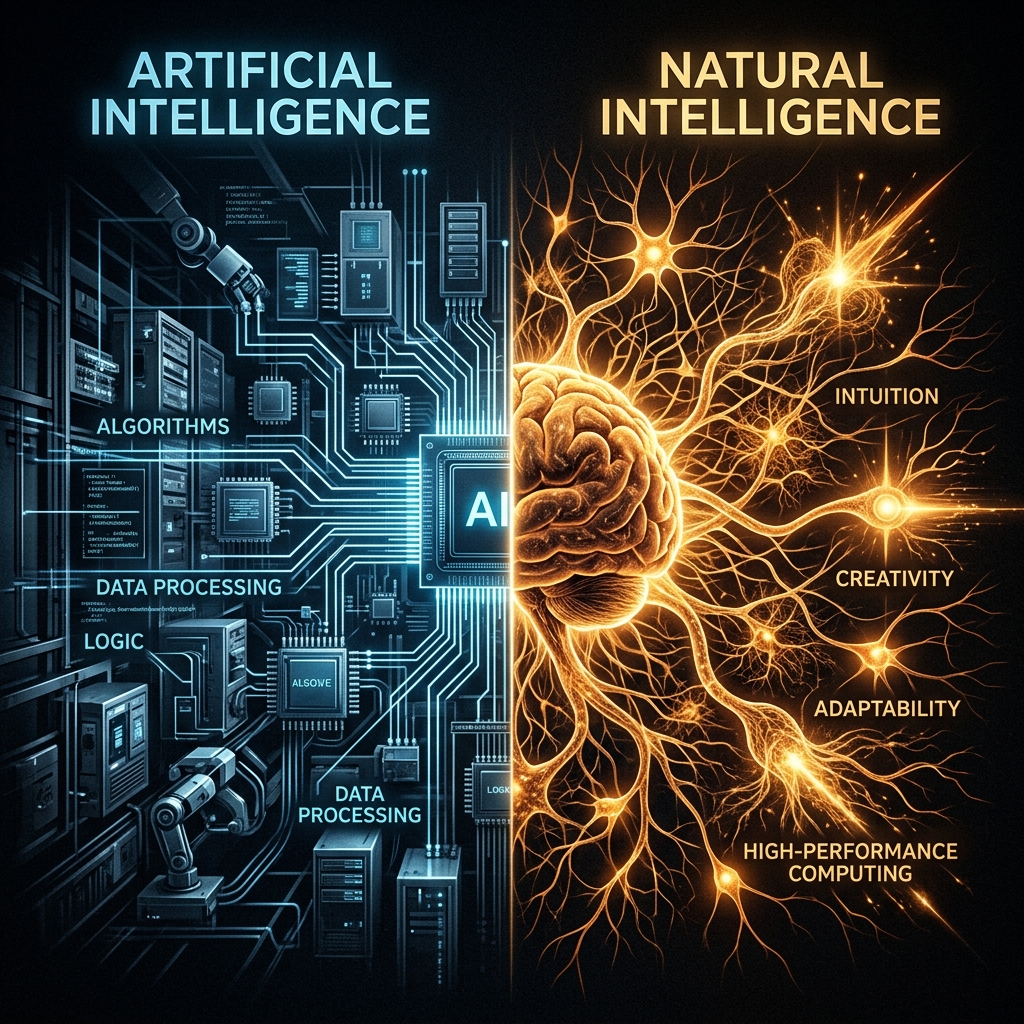
To execute this securely off-grid, we don’t rely solely on cloud LLMs. Deep-level security processing and intent filtering occurs locally via our NPU bridge architectures. This ensures the organization’s proprietary IP, from architecture logs to patent claims, never leaks outside the Sovereign Diamond.
Facing the Fear: Vulnerability in Autonomy
It's absolutely terrifying to let an algorithm execute a legal patent check or manage a live treasury funnel. In the beginning, the system will make mistakes (e.g., terminal deadlocks or API rate limiting). But here is the fundamental difference: because the organization is built on SDD, every single failure permanently upgrades the organization's DNA.
When an agent fails, it logs the failure, dissolves the contradiction, and updates its own constitutional rules. A human firm learns slowly; the NI organization learns at the speed of computation.
A Question for the Future
If you possessed an untiring, highly-specialized team of 10 C-Level executives that answered only to you, required no equity, and operated with absolute secrecy—what scale of ambition would you pursue tomorrow?